
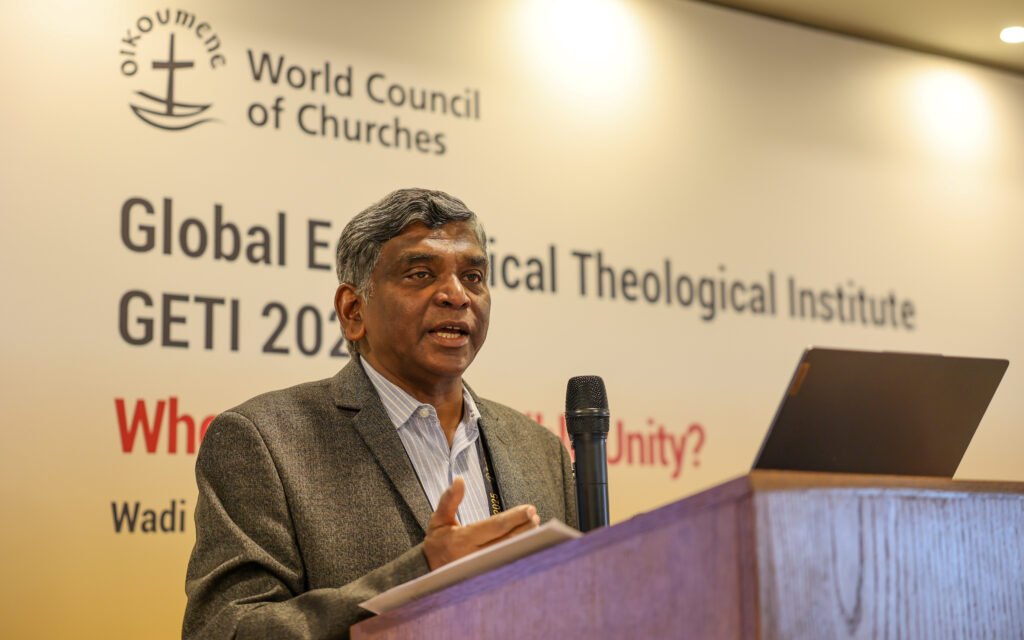
Global Ecumenical Theological Institute of the World Council of Churches in Wadi El Natrun, Egypt, on October 20, 2025.
In his plenary presentation on “Living out Ecumenism amidst Poverty and Economic Disparities”, Deenabandhu Manchala insisted on the moral necessity of problematising greed and injustice in a world of contrast and participating in mission beyond the confines and concerns of the institutional expressions of the church.
Elaborating on the overwhelming hold of greed, injustice, violence, and silence in many forms as the primary moral challenges of our time, Deenabandhu insisted on the need for a decolonised understanding of Christian faith. He said that the church colluded with the empires and abusive powers, justified human bondage, discrimination, exploitation of the earth and the ecosystem, legitimised oppressive hierarchies, and diminished the moral capacities of its adherents with extra-terrestrial obsessions.
He proposed a renewed understanding of Life, Church, Mission and Discipleship for Christians and churches to be agents of transformative change in the world. He further added that decolonisation involves collaborating with the marginalised and those resisting marginalising forces, reclaiming the centrality of justice to the affirmation and practice of Christian faith, and seeking transformative change through creative and critical engagement in public life.
Before the WCC’s World Conference on Faith and Order at the same place from October 24-29, 2025, the Global Ecumenical Theological Institute brought together 80 theological students from different parts of the world for a two-week-long study that focused on the theme: “Living Ecumenism: Seeking Justice, Unity and Reconciliation in a Wounded World”.