

Angelica Tostes
Recovering the memory of the ecumenical movement and its actions is essential for strengthening the ongoing struggles in Latin America. The concept of transformative ecumenism we seek to engage with today did not emerge in the present; it has always been alive in spirit in the territories of Nuestra América. Through a broad internationalist network of solidarity, the ecumenical movement confronted the dictatorships of the Southern Cone by organizing resistance, protecting threatened lives, and denouncing State crimes before the world.
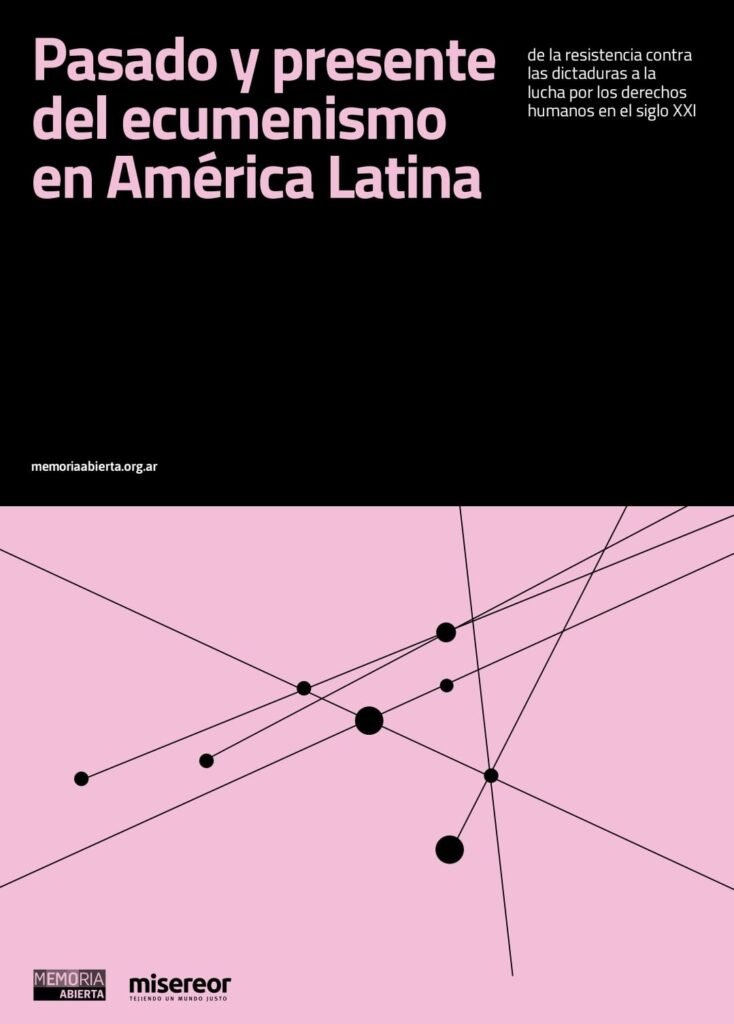
Within this framework, the research recently published by Memoria Abierta stands out. Memoria Abierta is an alliance of Argentine human rights organizations that promotes memory as a means to strengthen democratic life. The project “Redes Ecuménicas de Derechos Humanos” (Ecumenical Human Rights Networks) reconstructs the work carried out by ecumenical organizations during the dictatorships in the Southern Cone and their influence on the creation and sustainability of human rights organizations in the region. The document “Pasado y presente del ecumenismo en América Latina. De la resistencia contra las dictaduras a la lucha por los derechos humanos en el siglo XXI” (Past and Present of Ecumenism in Latin America. From Resistance Against Dictatorships to the Struggle for Human Rights in the 21st Century) (2025) offers a rigorous synthesis of this trajectory and restores the voices of those who were often silenced in official historiography.
The publication demonstrates that ecumenical work for human rights was decisive for the emergence of associations of survivors and families of victims, for the consolidation of the global human rights movement, and for the articulation of horizontal networks of activism between the Global North and the Global South. It moved far beyond what its own actors described as “active accompaniment.” This was a daily and embodied ecumenism built through concrete and risky actions such as sheltering persecuted people, documenting atrocities, internationalizing denunciations, and sustaining hope amid terror.
Methodologically, the decision to listen to and narrate lived histories is remarkably accurate. It aligns with ethical and theological commitments to life. By centering testimonies and archival reconstruction, the study highlights emotional, spiritual, and communal dimensions as constitutive elements of both memory and resistance.
The analysis also connects this history to current realities. The legacy of the dictatorships persists in the region, marked by profound social and economic inequities that remain unresolved. In this context, ecumenical agendas have been broadened to include demands for truth and justice, opposition to structural forms of violence, the dismantling of gendered and racial inequalities, the protection of territories and Indigenous lives, the rights of migrants, and the struggle for life with dignity free from hunger and discrimination.
As a member of the Steering Group of the Transformative Ecumenism Movement (TEM), I had the honor of being interviewed for the research and of participating in the virtual launch of the publication. For us, this memory is not merely archival material. It is a political tool, a source of hope, and an invitation to collective transformation.
I recommend reading and widely sharing this material to inspire our global movement in the face of the injustices we continue to confront. Our memory remains alive. Our hope remains active. Our ecumenism continues to transform.
My heartfelt thanks to the research and writing team: Maisa Bascuas, Celina Flores, Alejandra Oberti, and Verónica Torras, for their dedicated work in recovering this powerful and necessary memory. Your commitment to truth, justice, and historical reconstruction strengthens our collective struggle and inspires ongoing action across our continent.
Access the publication and explore the full research on Memoria Abierta’s website. Let this memory strengthen our collective struggle for justice and human dignity today:
https://memoriaabierta.org.ar/wp/pasado-y-presente-del-ecumenismo-en-america-latina