
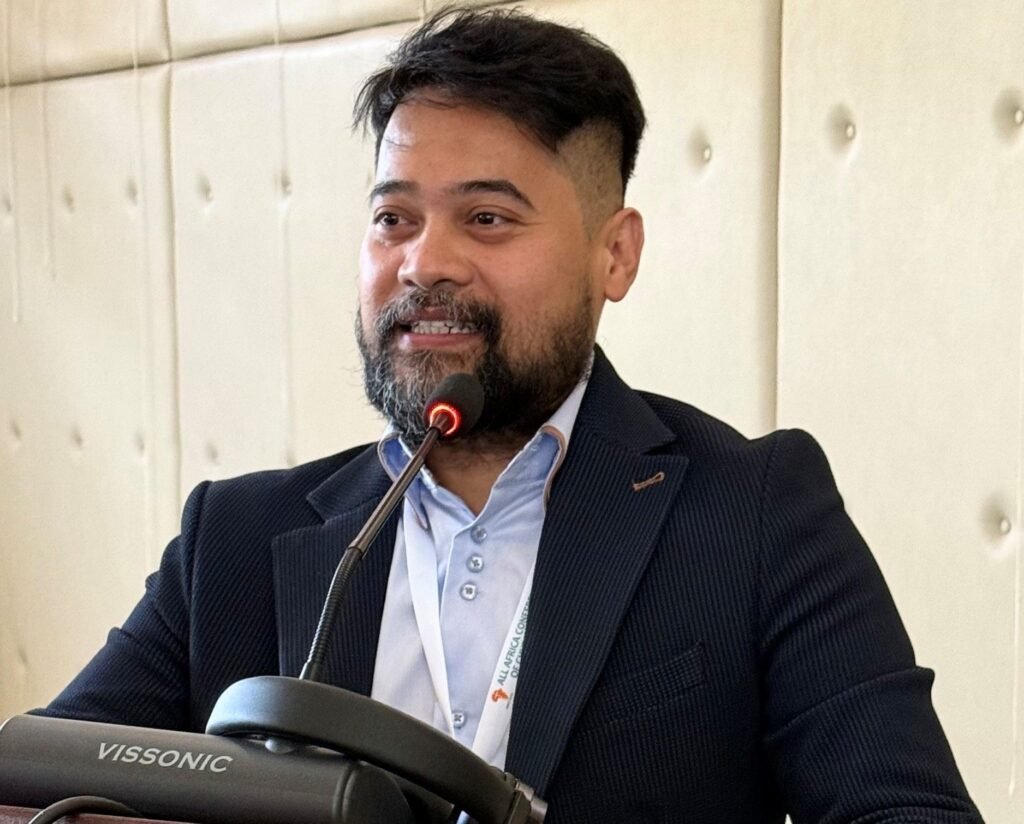
The air in the Desmond Tutu Conference Centre in Nairobi was thick with palpable expectation. I was there, surrounded by a vibrant tapestry of African Christianity, to present the vision of the Transformative Ecumenism (TE) movement at the 6th Annual Theological Symposium of the All Africa Conference of Churches (AACC-CETA). The journey to this moment was itself a testament to the movement’s collaborative Spirit, with the entire endeavour made possible through the support of the Council for World Mission (CWM). As I looked out at the audience, I saw a living embodiment of the global body of Christ—faces representing Catholic, Orthodox, Protestant, Pentecostal, Presbyterian, Methodist, Evangelical, Wesleyan, Reformed, and Anglican traditions, all gathered in one space.
Presenting the core principles of Transformative Ecumenism to this diverse assembly was a profoundly enriching experience. I spoke of a faith that moves beyond doctrinal cordiality to active, justice-seeking solidarity. This vision resonated deeply in a context where shared societal challenges often overshadow theological divides. The questions and discussions that followed were not merely academic; they were deeply rooted in the lived realities of African communities. Through these interactions, my own understanding was immeasurably enriched. I learned of the continent’s rich theological history, its resilient Spirit in the face of post-colonial challenges, and the unique ways in which the gospel is being incarnated in different cultural contexts. Each conversation was a lesson in a faith forged through both struggle and profound hope.
What truly empowered me, however, were the powerful testimonies shared with me during the fellowship hours. A Presbyterian pastor from West Africa spoke of working for peace in a region fractured by conflict. An Anglican deaconess from East Africa shared her ministry with women and youth marginalised by poverty. Their stories were not tales of despair but powerful declarations of faith in action, perfectly aligning with the very mission of the TE movement. The response was overwhelmingly positive and profoundly moving. Church leaders from various traditions expressed their high appreciation for the TE movement’s vision and mission. Many approached me with a wave of excitement, eager to learn more and actively explore how their congregations and denominations could join this promising movement. They saw in TE not just another program but a relevant and necessary framework for unity and action in their own contexts.
My participation in the symposium in Nairobi was more than a presentation; it was a divine appointment. It confirmed that the hunger for a faith that transforms both soul and society is universal. I left Nairobi, Kenya, not only with a renewed sense of purpose for the TE movement but also with a heart full of gratitude for the fellowship, the shared wisdom, and the clear evidence that the Spirit is moving across Africa, calling a diverse church into a unified mission of societal transformation.Hadje Sadje Crescentio Sadje, from the Philippines, is currently pursuing a PhD in studies at the University of Brussels, Belgium.