
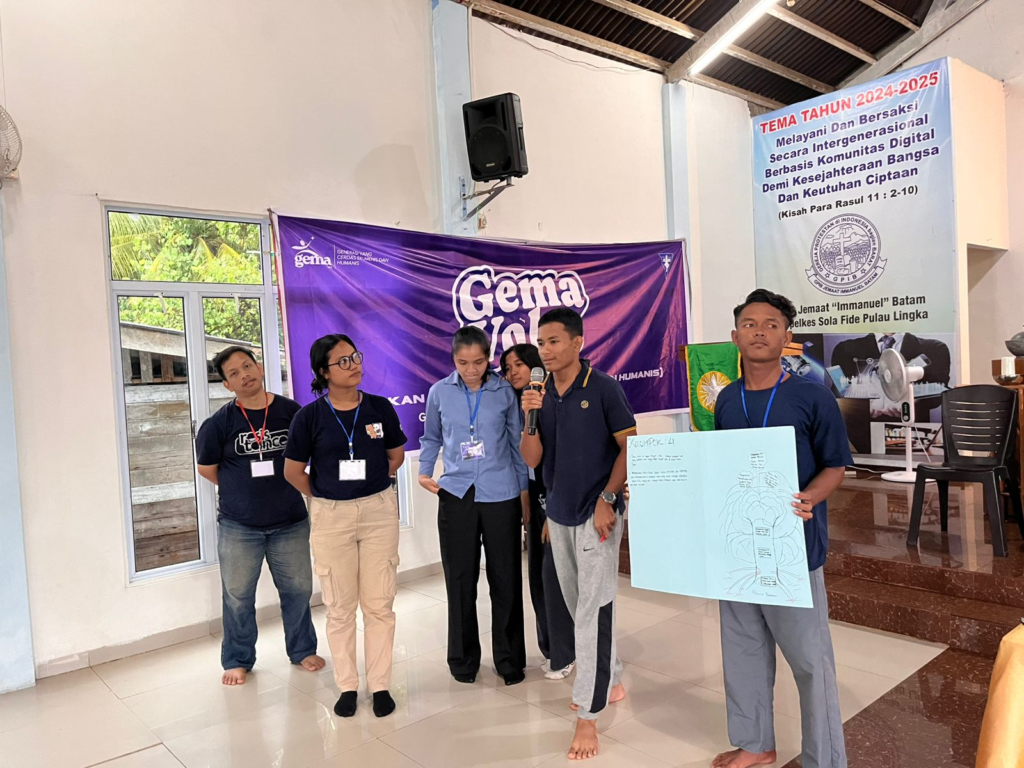
The ecumenical movement represents a shared commitment among churches to pursue unity, strengthen Christian witness, and serve humanity. In the context of contemporary social challenges, it is important to encourage the younger generation to understand and actively engage in the ecumenical movement in ways that are relevant and transformative.
The GEMA (Generasi yang Cerdas Ekumenis dan Humanis) program was initiated by GPIB Bukit Layang Congregation and carried out at GPIB Pos Pelkes Sola Fide on Lingka Island. This initiative was developed as a platform to introduce and discuss the Transformative Ecumenism Movement (TEM) with young people, encouraging them to reflect on the role of faith and ecumenical cooperation in responding to contemporary humanitarian challenges. Through the GEMA program, young participants were invited to learn, engage in dialogue, and develop creative ideas to address social and humanitarian issues in their communities.
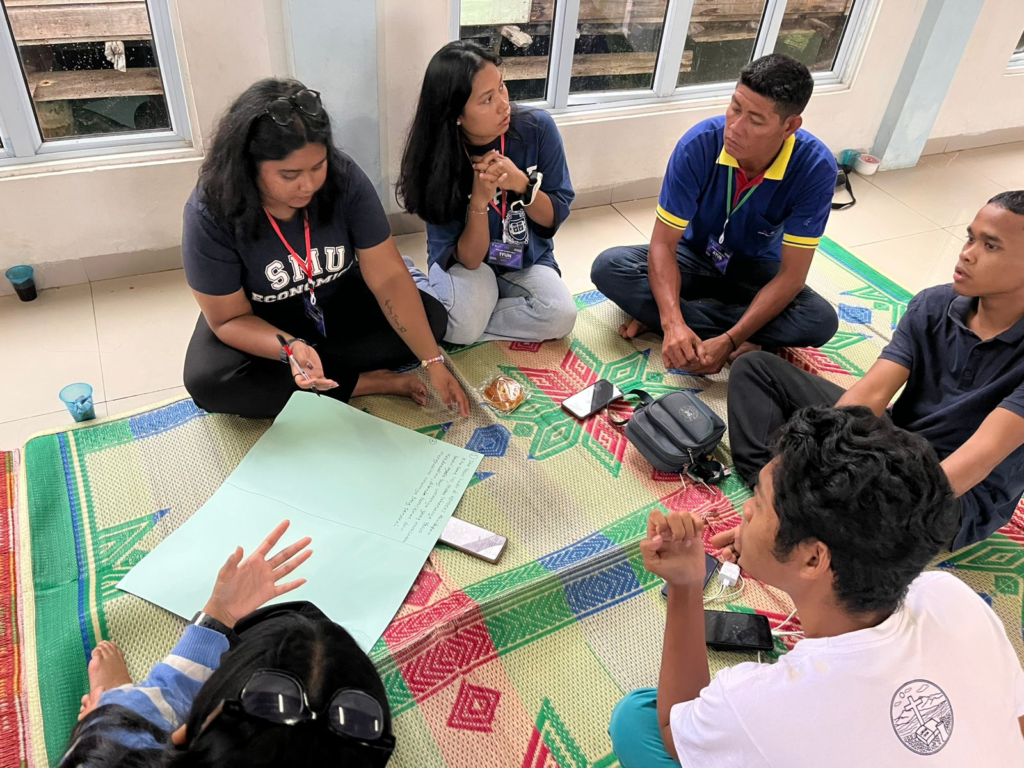
The program included presentations, group discussions, and reflective sessions. Through these activities, participants explored how churches can respond constructively to contemporary humanitarian issues, including poverty, social inequality, environmental degradation, and other challenges affecting communities today.
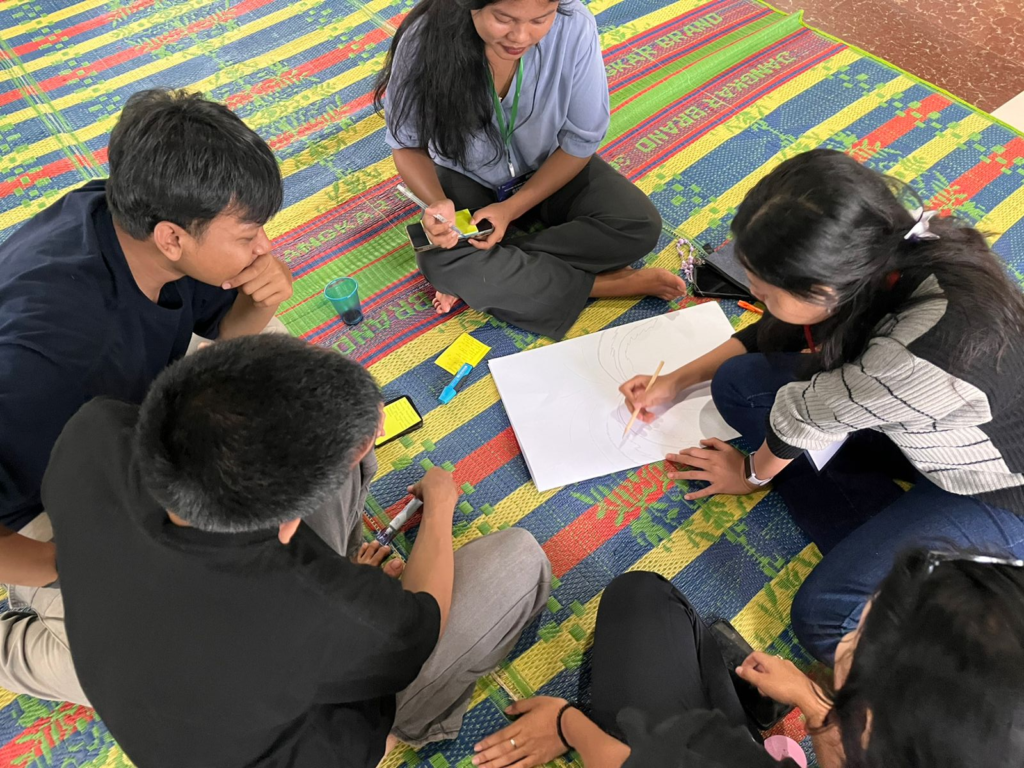
Participants were also encouraged to express their perspectives and develop creative ideas on how young people can contribute to addressing humanitarian issues. The discussions generated several proposals for initiatives, including community service activities, environmental awareness programs, educational outreach, and collaborative actions among churches to promote solidarity and social responsibility.
The local context of Lingka Island is an important aspect of this initiative. The people who live on the island are part of the indigenous Sea Tribe community (Suku Laut), who have traditionally lived in close relationship with the sea and coastal ecosystems for generations. Their cultural identity, livelihood, and daily life are deeply connected to the marine environment.
In recent years, however, the community has faced significant challenges due to environmental degradation and the destruction of coastal and marine ecosystems. These environmental changes have had a direct impact on the livelihood and well-being of the local community.
Within this context, the GEMA program also aims to raise awareness among young people of the importance of ecological responsibility, social justice, and solidarity with communities facing environmental and humanitarian challenges. By learning about Transformative Ecumenism, participants are encouraged not only to understand ecumenical values but also to become agents who can “echo” (GEMA-kan) these values through concrete actions that promote care for creation and compassion for vulnerable communities.
In this way, they can become agents of change who carry forward the spirit of unity, solidarity, and concern for humanitarian issues within both the church and the wider community.
~ Pauline Patricia, Indonesia